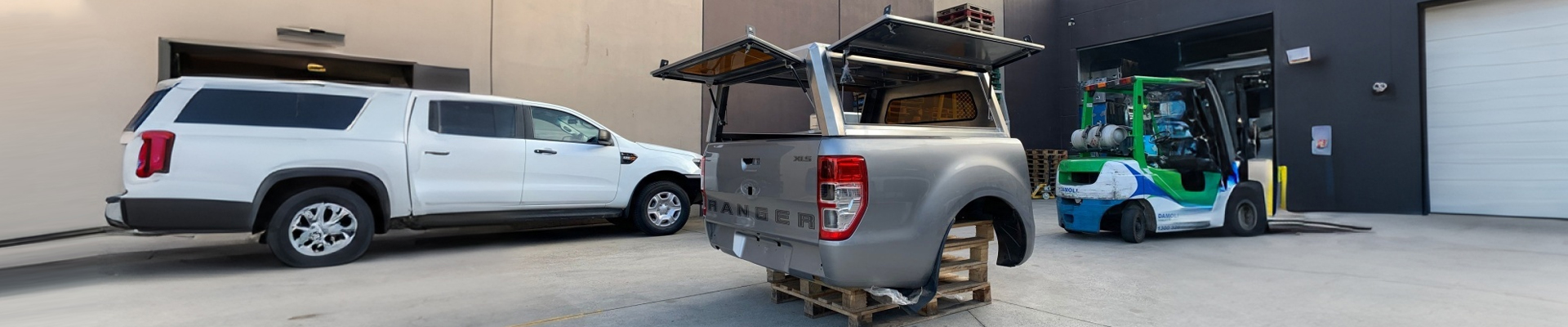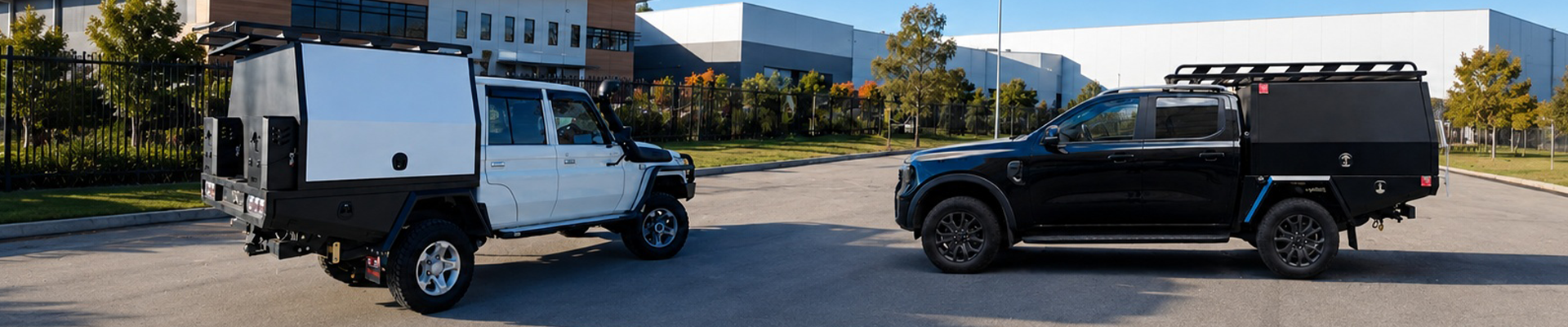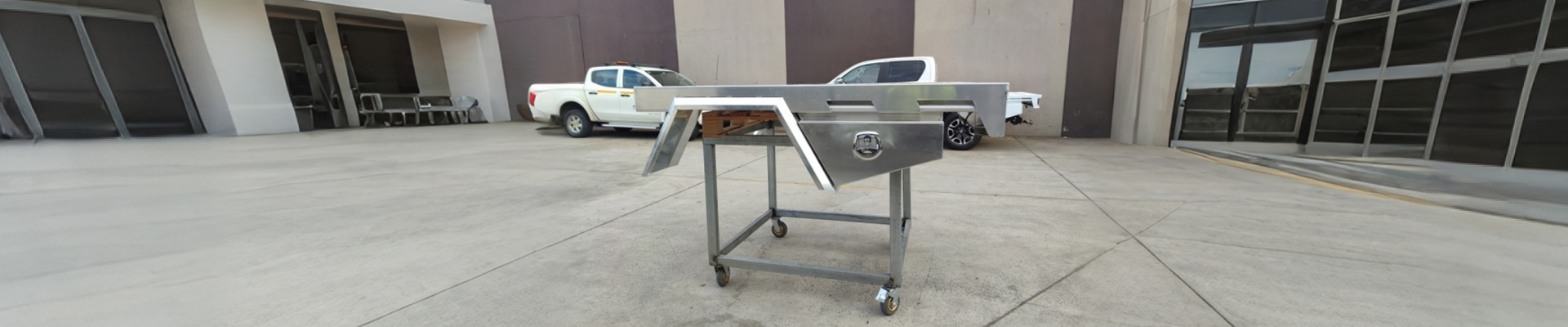
In Australia, the pickup truck—more commonly referred to as the UTE—is not merely a vehicle. It is a cultural symbol, a workhorse, and for many households and businesses, an essential tool of daily life. From construction sites in Sydney’s outer suburbs to cattle stations in Queensland, from mining roads in Western Australia to weekend off-road tracks in Victoria, the Australian UTE operates in some of the harshest and most diverse conditions in the world.
Within this context, heavy-duty trays and canopies are not optional accessories. They are structural upgrades that directly influence vehicle functionality, safety, productivity, and long-term ownership value. As the Australian automotive market continues to shift toward dual-cab utes that balance work and lifestyle, demand for durable, purpose-built tray and canopy solutions has grown rapidly.
1. The Australian UTE Market: A Unique Environment
Australia’s UTE market is fundamentally different from pickup markets in North America, Europe, or Asia. Several defining characteristics explain why heavy-duty trays and canopies play such a central role.
1.1 Geographic Scale and Distance
Australia’s vast geography means vehicles are often required to travel long distances without immediate access to services. Tradespeople, farmers, and remote workers rely on UTEs to carry tools, equipment, fuel, and supplies safely over extended periods. A factory tub, typically designed for urban or light-duty use, often fails to meet these demands.
Heavy-duty trays offer: – Higher payload tolerance – Better load distribution – Easier mounting of auxiliary equipment (toolboxes, spare wheels, water tanks)
Canopies, in turn, provide secure and weather-resistant storage—critical in remote and rural areas.
1.2 Climate and Environmental Stress
Australian conditions are unforgiving: – Extreme heat – Coastal corrosion – Red dust and fine particles – Mud, water crossings, and UV exposure
These factors accelerate wear and tear on standard vehicle components. Heavy-duty trays and canopies, particularly those made from aluminum or galvanized steel, are engineered to withstand these stresses far better than OEM tubs.
1.3 Work–Lifestyle Duality
Modern UTE buyers increasingly expect one vehicle to serve multiple roles: – Weekday work vehicle – Weekend family or touring vehicle – Off-road and recreational platform
Heavy-duty trays and modular canopies support this duality by allowing customization without permanently compromising vehicle versatility.
2. Understanding Heavy-Duty Trays: Beyond the Factory Tub
2.1 What Defines a Heavy-Duty Tray?
A heavy-duty tray is not simply a flatbed replacement. It is a structural system designed for load-bearing, equipment mounting, and long-term durability.
Key characteristics include: – Reinforced subframe – High-strength aluminum or steel construction – Optimized weight-to-strength ratio – Integrated mounting points
In contrast, factory tubs are optimized for cost, aesthetics, and mass production rather than extreme utility.
2.2 Productivity and Load Efficiency
For tradespeople and commercial operators, productivity is directly linked to vehicle setup. Heavy-duty trays allow: – Faster loading and unloading – Improved organization – Reduced risk of cargo damage
Flat tray designs also accommodate oversized or irregular loads that would not fit inside a standard tub.
2.3 Safety and Compliance
Improper load distribution is a major safety risk. Heavy-duty trays are engineered to align with vehicle chassis geometry, reducing: – Rear axle overloading – Suspension stress – Vehicle instability
This is particularly relevant in Australia, where roadworthiness and load restraint regulations are strictly enforced.
3. The Role of Canopies: Security, Protection, and Versatility
3.1 Why Canopies Are Essential in Australia
Canopies transform an open tray into a secure, enclosed workspace. In Australia, this serves several critical functions: – Protection from weather and dust – Theft deterrence – Safe transport of tools and sensitive equipment
For many UTE owners, a canopy effectively replaces a small van—while retaining off-road capability.
3.2 Types of Canopies and Their Applications
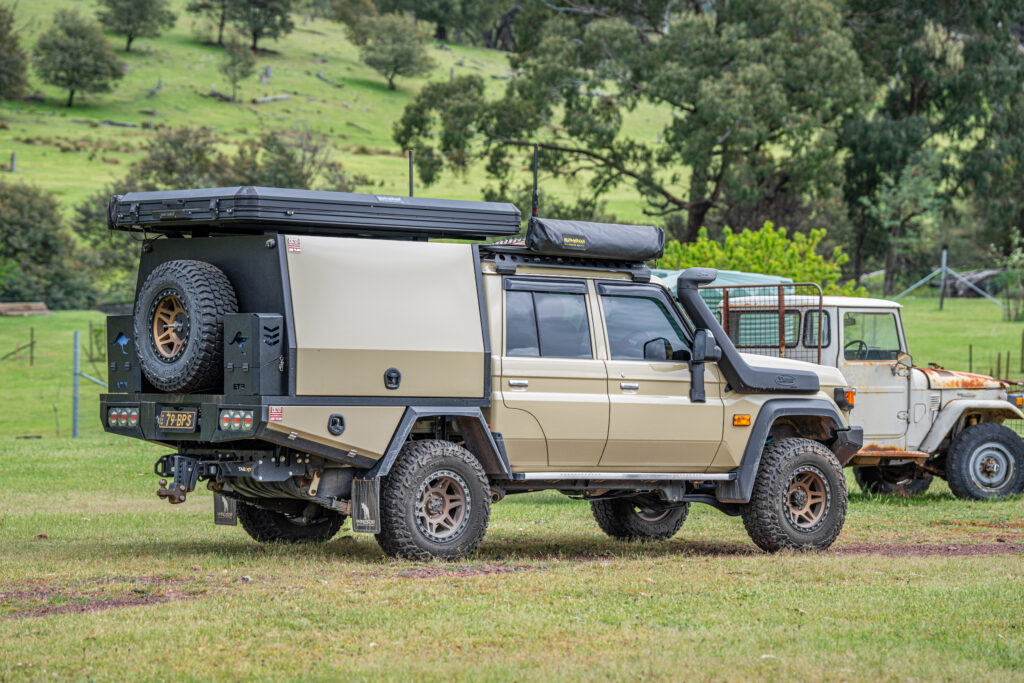
Common canopy types include: – Full aluminum canopies for commercial use – Modular canopies for mixed work and lifestyle use – Lightweight touring canopies for overlanding and camping
Each type reflects a different balance between weight, durability, and customization.
3.3 Commercial Value and ROI
From a business perspective, heavy-duty canopies: – Extend vehicle lifespan – Reduce equipment loss – Improve professional appearance
These factors contribute to a higher return on investment compared to factory configurations.
4. Materials and Manufacturing Technologies: What Makes a Tray or Canopy Truly Heavy-Duty
4.1 Material Choices in the Australian Context
Material selection is one of the most critical factors determining whether a tray or canopy can genuinely be classified as heavy-duty. In Australia, materials must withstand heat, vibration, corrosion, and prolonged exposure to dust and moisture.
The most common materials include:
- Aluminium (Alloy): Lightweight, corrosion-resistant, and increasingly preferred for both trays and canopies. High-grade aluminium offers an excellent strength-to-weight ratio, which helps maintain payload capacity while improving fuel efficiency.
- Steel (Galvanised or Powder-Coated): Traditionally used for extreme load applications. Steel trays are exceptionally strong but add significant weight and require corrosion protection, particularly in coastal regions.
- Composite and Hybrid Designs: Emerging solutions that combine aluminium frames with composite panels to reduce weight while retaining rigidity.
For most Australian UTE owners, aluminium heavy-duty trays and canopies strike the best balance between durability, weight, and long-term ownership cost.
4.2 Structural Engineering and Load Management
Heavy-duty performance is not only about material but also about how that material is engineered. Key design considerations include:
- Chassis-aligned mounting systems
- Reinforced cross-members
- Load-spreading tray floors
- Integrated tie-down and accessory mounting points
These elements ensure that loads are distributed evenly across the vehicle chassis rather than concentrated in stress points—a critical factor for safety and compliance.
4.3 Manufacturing Quality and Tolerances
Precision manufacturing plays a major role in product longevity. Poor welds, inconsistent panel thickness, or inadequate sealing can quickly lead to fatigue and failure under Australian conditions.
High-quality heavy-duty trays and canopies are typically: – CNC-cut for accuracy – TIG or robotic MIG welded – Designed with modular repairability in mind
5. Design Adaptations for Australian Conditions
5.1 Heat, UV, and Thermal Expansion
Australia’s climate presents unique challenges. Prolonged exposure to high temperatures and UV radiation can degrade seals, finishes, and structural integrity.
Well-designed heavy-duty trays and canopies incorporate: – UV-stable powder coatings – Ventilation systems to reduce internal heat build-up – Expansion allowances to prevent material fatigue
5.2 Dust, Water, and Environmental Sealing
Fine dust infiltration is a common complaint among Australian UTE owners, particularly those operating in rural or mining regions. Heavy-duty canopies are designed with: – Automotive-grade rubber seals – Overlapping door and panel designs – Positive-pressure ventilation options
These features significantly improve cargo protection compared to standard tubs or soft covers.
5.3 Corrosion Resistance Across Regions
From coastal salt exposure to inland red dust, corrosion risks vary dramatically across Australia. Aluminium construction, stainless steel hardware, and proper surface treatments are essential for long-term durability.
6. Heavy-Duty Tray vs Standard Tub: A Practical Comparison
6.1 Payload and Load Flexibility
Factory tubs are designed primarily for light-duty consumer use. In contrast, heavy-duty trays are engineered to handle: – Higher static and dynamic loads – Point loads from machinery or pallets – Custom mounting of accessories
This flexibility is particularly valuable in commercial and agricultural applications.
6.2 Accessibility and Workflow Efficiency
Trays offer 360-degree access, making them far more efficient for loading and unloading tools and materials. For tradespeople, this translates directly into time savings and reduced physical strain.
6.3 Long-Term Ownership Costs
While heavy-duty trays require a higher initial investment, they often reduce total cost of ownership by: – Minimising damage to the vehicle – Extending usable service life – Increasing resale value
7. Use Case Analysis: Construction and Trade Applications
7.1 Daily Demands on Construction UTEs
Construction and trade vehicles are subjected to daily heavy use, including: – Transporting tools and materials – Operating on uneven terrain – Frequent loading and unloading
Heavy-duty trays provide a robust platform for toolboxes, ladder racks, and safety equipment, while canopies protect valuable tools from theft and weather.
7.2 Professional Image and Compliance
For many trades, vehicle presentation is part of brand identity. A well-designed canopy system projects professionalism while supporting compliance with load restraint and safety regulations.
8. Use Case Analysis: Agriculture and Rural Operations
8.1 Reliability in Remote Areas
Farmers and rural operators often work far from service centres. Equipment failure is not merely inconvenient—it can be costly and dangerous.
Heavy-duty trays allow: – Transport of fencing materials – Mounting of spray units and water tanks – Easy cleaning and maintenance
8.2 Adaptability to Seasonal Work
Agricultural work varies seasonally. Modular tray and canopy systems allow configurations to change as operational needs evolve.
9. Use Case Analysis: Off-Road, Touring, and Lifestyle Users
9.1 Growth of the Touring Market
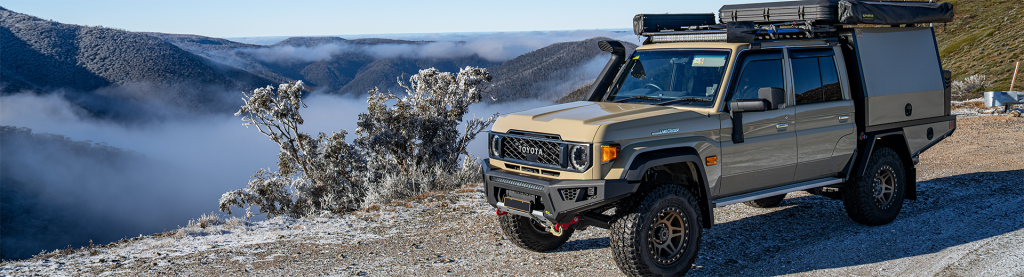
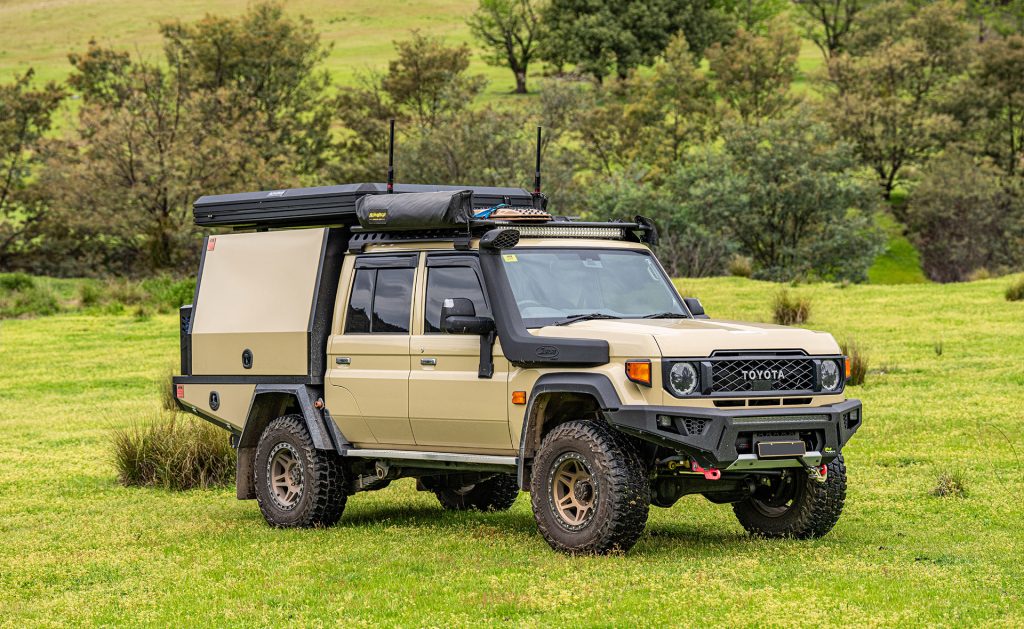
Australia’s strong 4WD and touring culture has driven demand for canopies that support camping, overlanding, and extended travel.
These users prioritise: – Lightweight construction – Integrated storage systems – Compatibility with rooftop tents and solar setups
9.2 Balancing Lifestyle and Utility
For lifestyle users, heavy-duty trays and canopies offer versatility—supporting weekday work and weekend adventure without compromise.